
The communities keeping Western Australian racing alive
In Western Australia, a racecourse can be more than a sporting venue.
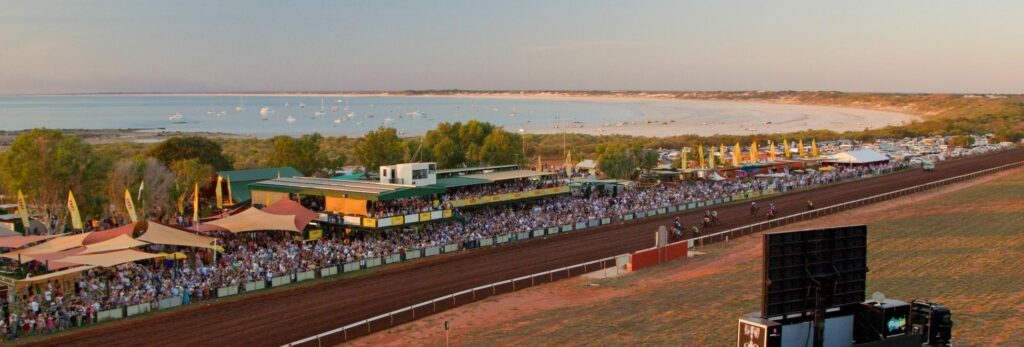
In some towns, it is where generations meet, local businesses find an audience and an ordinary weekend becomes something worth travelling for.
That is the less glamorous — but perhaps more important — story of Western Australian horse racing.
Racing Across 3,000 Kilometres
Country Racing WA represents 25 country race clubs stretching from Kununurra in the north to Esperance in the south — a distance of more than 3,000 kilometres. Many of those clubs were established during the state’s pioneering era.
That scale makes WA racing unusual.
A race day in the Kimberley can look completely different from one in the Wheatbelt or Goldfields. Yet the basic purpose remains remarkably similar: bring people together around horses and competition.
A Reason to Gather
For smaller communities, a race meeting can become an important social occasion.
Kojonup’s Wandecla Races, for example, are organised with significant volunteer involvement from the local polo and polocrosse community and receive strong support from local businesses.
The racecourse therefore becomes a meeting point.
Families come along. Businesses get involved. Visitors arrive from surrounding towns.
The horses may be the attraction, but the community is what gives the day its character.
The Story of Laverton
Few examples illustrate this better than Laverton.
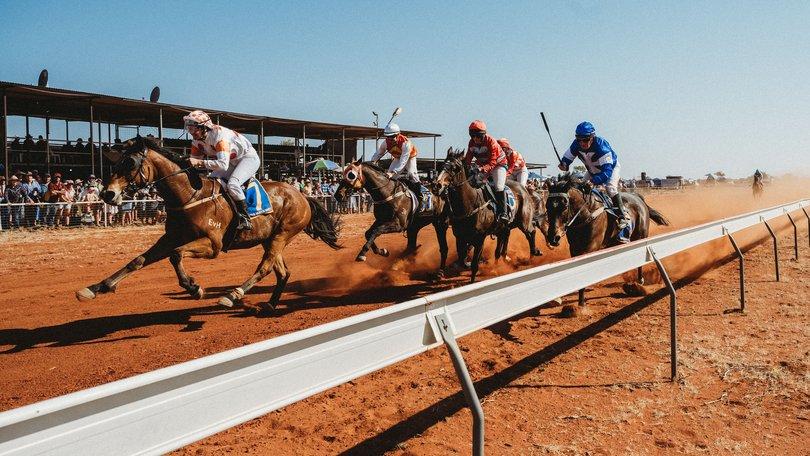
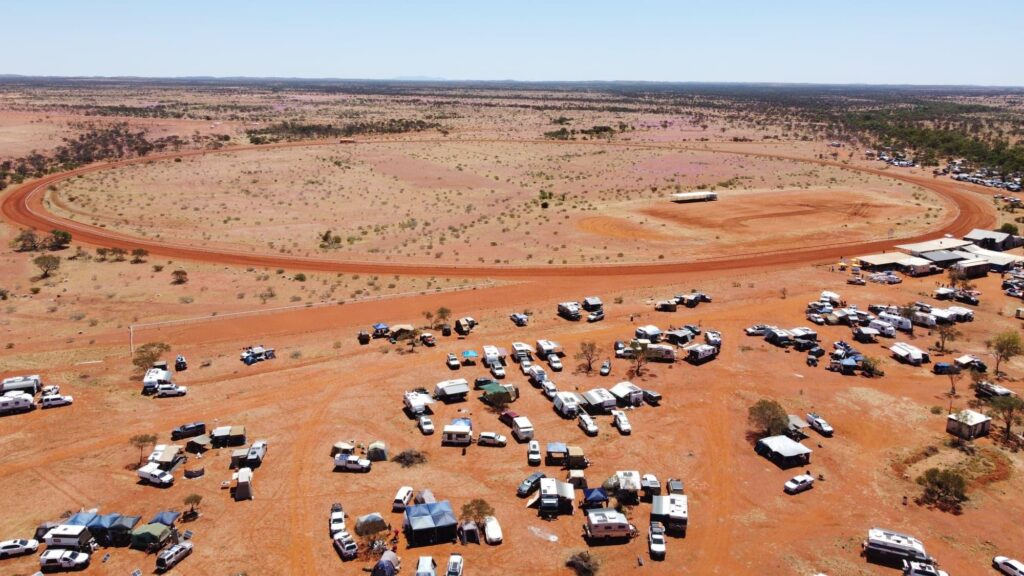
The local race track was established in 1956 by a small group of club members. Its first meeting featured locally bred horses, stock horses and station riders, with no starting gates available. The early races were started using a simple rubber strand.
It is a remarkable contrast with modern professional racing.
Today, sophisticated equipment, professional jockeys and thoroughbred racing dominate the sport.
But the origins of racing in places such as Laverton were much simpler.
People had horses.
People wanted to race them.
And the community created an event.
From Red Dirt to the Kimberley
Western Australia’s regional racing landscape is full of these distinctive stories.
Leonora’s racing tradition stretches back to 1900, while the town’s Leonora Cup remains an important annual event associated with local heritage and community spirit.
In the state’s north, the Nor West Jockey Club traces organised racing around Roebourne to the 1860s. Its race weeks historically included not just racing, but picnics, concerts and social events.
And then there is Broome.
The Broome Turf Club’s current racecourse sits at Gantheaume Point near Cable Beach, where tropical conditions and the Indian Ocean create one of Australia’s most distinctive racing environments.
These are not interchangeable race meetings.
Each has developed its own personality from the landscape and community around it.
The Business Behind the Crowd
The social value of racing also has an economic side.
When visitors travel to a regional race meeting, they may use local accommodation, restaurants, cafés, transport and other services.
The WA Government estimates that the state’s racing industry contributes more than $1.3 billion to the economy each year and supports thousands of local jobs.
Regional racing is part of that larger picture.
In June 2026, the WA Government announced a $25.2 million investment in regional racecourse infrastructure, covering venues across the state. The projects include improvements to tracks, lighting, fencing, horse stalls, administration areas and jockey facilities.
That investment is significant because it recognises that a racecourse can serve a purpose beyond racing itself.
It can be community infrastructure.
Broome Shows What Racing Can Become
The Broome Cup provides a particularly strong example.
The 2026 event attracted thousands of racing enthusiasts to the Kimberley and formed the culmination of a week of racing in the town. The WA Government estimates that racing in the Kimberley contributes around $22.9 million to the state’s racing economy.
That is a long way from the image of a small country race meeting.
It shows how a local event can become a tourism attraction while still retaining its community identity.
A New Future for Country Racing
The challenge now is making sure these traditions remain sustainable.
Regional clubs operate across enormous distances. They need modern facilities, reliable infrastructure and enough participants and spectators to keep meetings viable.
The WA Government has also begun an independent review of the industry’s long-term financial sustainability, looking at how thoroughbred, harness and greyhound racing can remain viable across the state.
For country racing, that conversation matters.
The future cannot rely entirely on nostalgia.
The sport needs to adapt while preserving the character that makes regional meetings special.
The Real Finish Line
The most interesting thing about Western Australian racing may not be the horses themselves.
It is what happens around them.
A racecourse can bring visitors into a remote town.
It can give local businesses a busy weekend.
It can provide volunteers with a shared project.
It can connect generations of families.
And it can give a community a reason to celebrate.
That is why the future of WA racing should not be measured only by prize money or major metropolitan meetings.
Look instead at the small racecourses.
The volunteer-run clubs.
The country crowds.
The red-dirt tracks.
The towns that still fill up when the horses arrive.
Because sometimes, the most important race meeting is the one that gives an entire community somewhere to go.