
Where racing meets red dirt, coastal towns and country tradition
Western Australian horse racing has its own character.
It is shaped by distance, landscape and communities scattered across one of the largest and most diverse regions in the country.
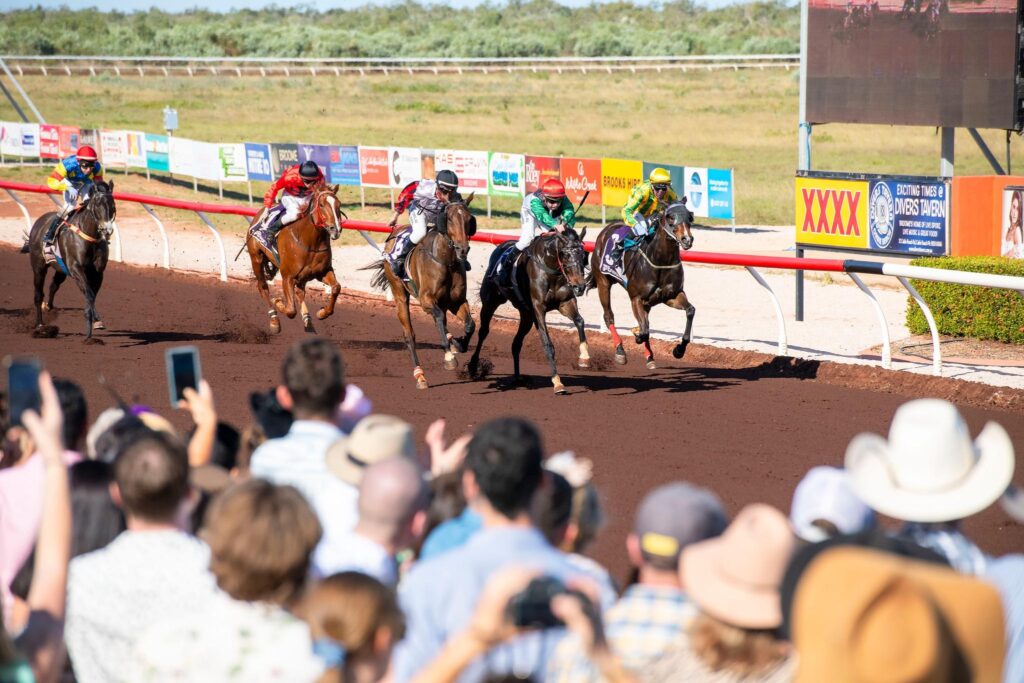
From Perth’s major metropolitan meetings to race days in Broome, Kalgoorlie, Kununurra and the Wheatbelt, racing in the west can look very different from one town to another.
But the connection between them is remarkably strong.
Racing Across a Vast State
Western Australia stretches more than 3,000 kilometres from north to south, and its country racing network reaches from Kununurra in the Kimberley to Esperance in the state’s south. Country Racing WA represents 25 country race clubs across that enormous area.
That distance is part of what makes WA racing distinctive.
A race meeting in Broome can feel worlds away from one at Ascot.
The climate is different. The landscape is different. The communities are different.
Yet the anticipation before the horses enter the barriers is familiar everywhere.
When the Racecourse Becomes the Town Square
In regional Western Australia, race day can be one of the biggest social occasions on the local calendar.
At Newman, for example, the annual Newman Cup is described by Country Racing WA as a significant social event attracting both locals and visitors. The meeting even incorporates a camp draft, bringing another part of regional equestrian culture into the day.
In Kojonup, the Wandecla Races are supported by local businesses and volunteers, with members of the community involved in everything from planning to running the meeting.
This is racing at its most grassroots.
The racecourse isn’t simply somewhere horses compete.
It is somewhere people meet.
Racing in the Outback
Few places demonstrate the adventurous side of Western Australian racing better than the state’s remote communities.
At Laverton, the local race club was established in 1956, with early meetings featuring locally bred horses, stock horses and riders from surrounding stations. The club’s history reflects how racing developed from the practical realities of remote Australian life.
Further north, the Nor West Jockey Club in Roebourne traces organised racing in the region back to the 1860s.
Its early meetings included races, picnics, concerts and even a grand ball.
The Roebourne Cup remains a major event today.
These stories reveal something important.
Western Australian racing was not simply imported into country communities.
In many places, communities built their own racing traditions around the lives they were already living.
Broome: Racing Beside the Ocean
Then there is Broome.
The Broome Turf Club’s history stretches back more than a century, with the first Broome Cup believed to have been run in 1894. The current track at Gantheaume Point sits close to Cable Beach, giving the racing season a setting unlike almost anywhere else in Australia.
It is difficult to imagine a more distinctly Western Australian combination:
thoroughbreds, tropical heat, red earth and the Indian Ocean.
The racing season also attracts trainers and horses from southern areas, adding another layer to the region’s unique racing culture.
The Goldfields Tradition
Further inland, Kalgoorlie-Boulder offers another version of WA racing.
Goldfields racing has a history deeply connected with the development of regional Western Australia. The racecourse becomes particularly significant during major carnival periods, when racing brings together locals, visitors, businesses and the wider Goldfields community.
Here, the atmosphere is different again.
The landscape is dry.
The distances are enormous.
But the enthusiasm remains.
A Modern Industry
It would be easy to think of Western Australian country racing as purely nostalgic.
It isn’t.
The state is investing in the future of regional racing.
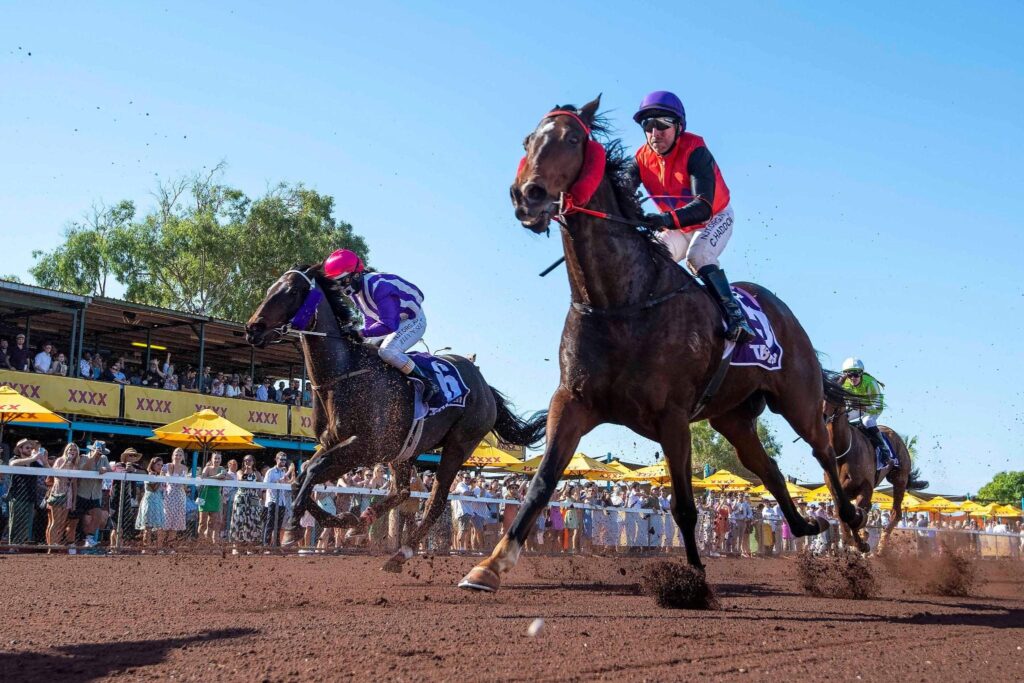
In 2026, the WA Government announced $25.2 million in funding for upgrades across regional racecourses. Projects include improvements to tracks, lighting, fencing, horse stalls, cameras, administration areas and facilities for jockeys and female participants.
That investment says something about the industry’s future.
The traditions may be old, but the infrastructure supporting them cannot remain frozen in time.
Why Regional Racing Matters
The importance of WA racing cannot be measured only by prize money or the quality of horses.
Its real strength may be the communities surrounding it.
A country race meeting requires volunteers.
It needs local businesses.
It needs trainers, riders, stable workers and officials.
It brings visitors into towns and gives communities something to organise around.
In places where distances between towns can be enormous, those occasions matter.
A Different Kind of Glamour
There is also a fashion story here.
Western Australian race days do not always have the polished image associated with major eastern-state carnivals.
Instead, there is a different kind of style.
Country racegoers might combine traditional racewear with a distinctly regional attitude. At some meetings, fashion on the field sits alongside camping, live music, community events and country hospitality.
It is less about following a perfect dress code.
It is about making the day your own.
The Future of the West
Western Australian racing now sits between two worlds.
One is traditional: country clubs, historic cups, volunteers and generations of families connected to horses.
The other is modern: improved facilities, professional operations, digital audiences and greater expectations around participation and safety.
The challenge is finding a way to preserve what makes regional racing special while giving it the infrastructure and opportunities needed for the future.
That may be the real story of WA racing.
It isn’t simply surviving because of tradition.
It is evolving because the communities around it continue to care.
Where the Distance Becomes the Attraction
In most sports, distance is a disadvantage.
In Western Australian racing, it can be part of the appeal.
A race meeting beside Cable Beach.
A cup day in the Goldfields.
A country crowd gathering in the Wheatbelt.
A racecourse surrounded by red dirt and open sky.
These are not copies of metropolitan racing.
They are uniquely Western Australian.
And perhaps that is why the state’s racing culture remains so compelling.
The further you travel from the big city, the more you discover that Western Australian horse racing isn’t just about the horses.
It is about the places, the people and the stories that gather around them.